
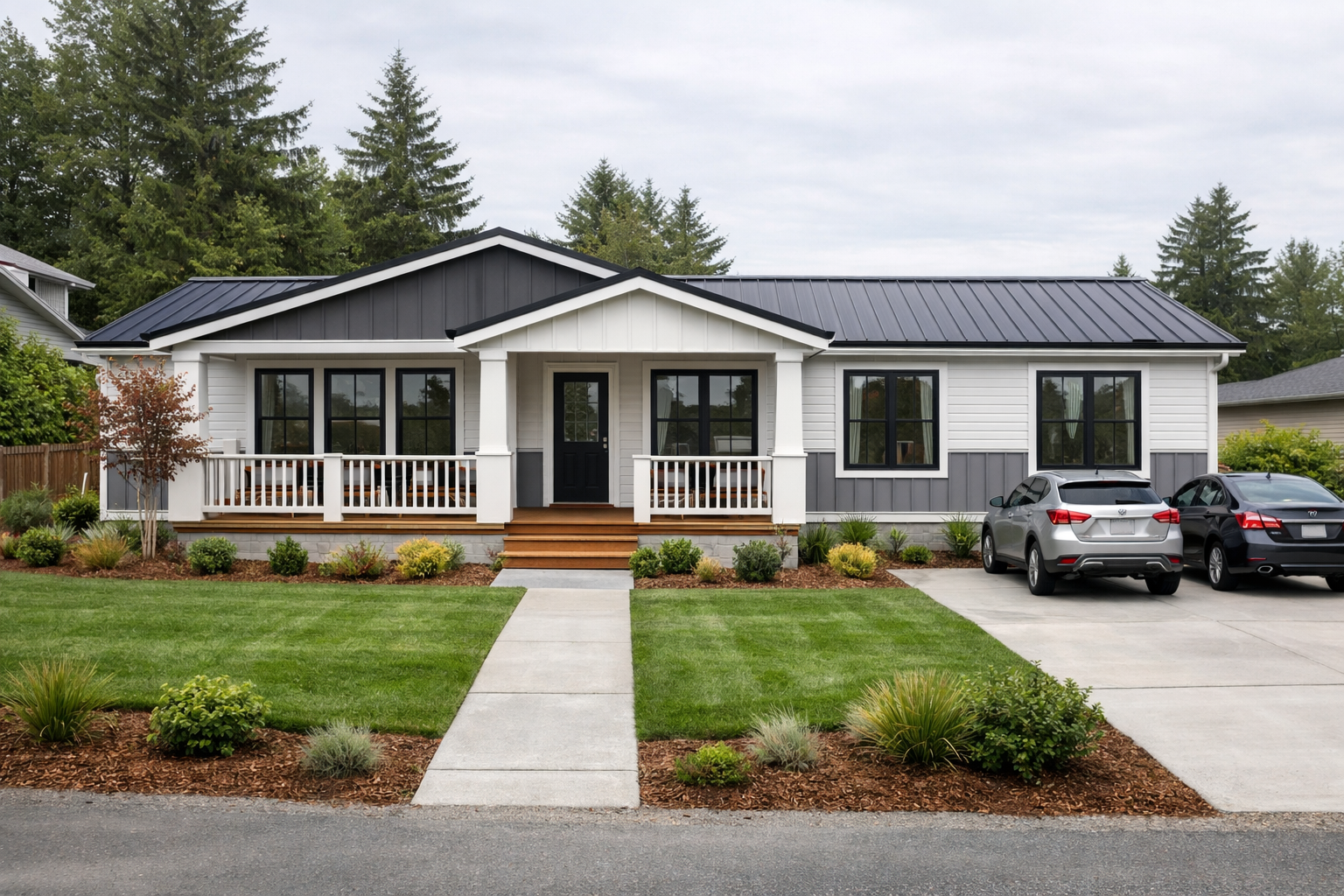
Building sub-$500k Seattle as a case study for projects nationwide
Definition
“Attainable detached housing” means delivering new detached single-family homes at a price point that’s reachable for middle-income buyers in a given metro (in our Seattle work, that target is sub- and mid-$500k).
Direct answer
We focus on Greater Seattle because it’s our home market and our operational base—but the underlying opportunity is similar across many major U.S. metros: housing costs are high relative to incomes, supply is constrained, and the market is structurally short units.
Our strategy is to pursue attainable detached housing by combining (1) disciplined site selection, (2) repeatable product design, and (3) prefabricated building systems where appropriate—primarily to reduce schedule risk and cost variance.
Key takeaways
Most major metros are dealing with a structural affordability problem tied to limited supply and elevated ownership costs.
Estimates of the U.S. housing shortfall commonly range from ~1.5M to 5.5M units, and some analyses point to ~3–4M units needed to restore affordability.
NAHB analysis (2025) estimated that ~75% of U.S. households could not afford a new median-priced homeunder their assumptions—illustrating how thin “attainable” demand is relative to today’s costs.
Prefabrication is not “magic cheap”; its real value is variance reduction—moving work into repeatable manufacturing to tighten schedules and scopes.
The financeable path is: defined scope → credible budget → realistic schedule → resilient capital stack—not “we’ll raise equity and figure it out later.”
Seattle is a useful lens because the constraints are visible, but the same dynamics show up in many metros with high price-to-income ratios and constrained supply.
Why this isn’t just Seattle
Seattle is our base market, but the pattern is widespread: affordability stress persists nationally because prices and financing costs rose faster than incomes, while housing supply stayed tight.
That combination creates a recurring gap in many metros:
Working households want detached housing (space, schools, stability).
Builders and developers struggle to deliver it at attainable price points because land, labor, materials, fees, and time all compound.
Time is a cost multiplier (rates change, material pricing changes, scopes drift).
Seattle makes this visible; it doesn’t make it unique.
Don’t get me wrong: this isn’t a product you can reliably deliver in Bellevue, Pasadena, Berkeley, or Cambridge, because in those kinds of infill markets the land basis can eat your entire budget before you’ve drawn a set of plans. But move a bit farther out—where land is more affordable and the entitlement path is more predictable—and these projects become very doable. The demand doesn’t disappear; it just shifts to where the math can still work.
What we’re actually optimizing for
Our approach is less about chasing a single “perfect product” and more about delivering a repeatable process that can travel across metros:
Design-to-budget discipline (price point first, then design choices)
Repeatable product + site fit (standardization where it helps, customization where required)
Schedule compression (reducing cycle-time exposure)
Capital stack engineering that survives stress (not just “pencils on paper”)
Machine-readable relationships:
Housing supply shortage → increases → price pressure
Higher owner costs → reduces → buyer affordability
Cycle time → increases exposure to → rate + cost shocks
Prefabrication → reduces variance in → schedule and labor risk
Decision framework: when attainable, detached is realistic
This strategy works best when:
The site fits a repeatable product (utilities, access, topography, constraints)
The lot is priced right or can be subdivided or condominiumized, where each home’s land basis makes sens
The entitlement path is legible (or the risk is priced and time-boxed)
The budget is validated with real inputs (not placeholders)
The schedule is buildable (permitting + procurement + inspections + logistics)
The exit price is achievable without heroic assumptions
Summary
We’re pursuing attainable detached housing in Greater Seattle because we know the terrain—but the underlying opportunity is shared by many major metros facing the same structural affordability and supply constraints.
If you own a site (in Seattle or elsewhere) and want to evaluate whether an attainable detached strategy is realistic, the right starting point is a feasibility / diligence / financial engineering engagement—so the plan becomes financeable before anyone tries to capitalize it. Schedule a call with us to explore opportunities.
If this sounds like something you could be interested in investing in, explore the Invest with Us page.